
Hide and Seek

Last week I wrote about a question I’ve spent much of this year thinking about: how do you get found (and even recommended) by AI? With more and more people turning to AI for answers, I knew this could be the key to success for many of my own pursuits.
Along the way, I built some tools to help answer it for myself. Today I’m launching them as a product. It’s called Hide and Seek.
Type in your website to see if AI can find it, and what to fix if it can’t. The scan is free, no account needed. There are paid plans, and I think they’re well worth it, but they’re not necessary.
Free, by design
Most tools in this space are bloated and expensive. I wanted the opposite: focused and affordable. I decided early on that the scans (and the score) should be free. And for the paid plans, I set a similar bar: a year for what others charge a month.
Meeting these goals required focus and some clever engineering.
Why is free so important to me? Because I’ve been there. The people who need this most can often afford it least.
An open-book test
The score is graded against a rubric, and the rubric is public. It includes every criterion, what it weighs, the evidence for it, and the evidence against it. Where there’s no evidence and I’m making a guess, I say so. I think some of my guesses are pretty good. Time will tell.
Nothing is a trick, and any site can reach 100, because the score is for can AI find you, which you control. As I wrote last week, there’s a big gap between can AI find you and does AI find you. That gap is authority: what others say about you counts more than what you say about yourself.
I think of it like this:
Can × Authority → Does
A hunch about authority
Here’s one of my guesses: authority depends on the question.
A link from a friend’s blog tells AI you exist. It doesn’t tell AI you’re the answer to “who should I hire to build my app?” To be in the running for a question, I think you have to show up alongside the question, on the pages AI reads when someone asks it.
So that’s where Hide and Seek looks for authority. It searches for where you show up alongside your questions, and it reads the pages the assistants cite when they answer. Then it has to decide something that sounds easy: is this page about you, or about something else with your name? Roost is my coworking studio in Boulder. It’s also a word.
I spent more than a few nights writing rules to tell the difference. Each rule fixed one scenario and broke another.
So I stopped playing whack-a-mole and automated the process. With AI’s help, I labeled about 1,800 real pages to use as an answer key. I set a third of them aside and used the rest for learning. Then I put AI in a loop: write a rule, try it on those pages, see what it fixed and what it broke, and try again. Only then did a rule take the test, on the pages I’d set aside. A rule that only worked on the pages it had seen hadn’t learned anything; it had memorized the answers.
The test was humbling. The loop created rules that found 72 of every 100 pages that belonged. A small model, asked one plain question, found 95.
So I use AI for a single question: is this page about you?
I could be wrong about the hunch. Over time, I’ll have the data to find out, and I’ll tell you either way.
What a plan does
The score tells you whether AI can find you. Whether it does is a different question, and it’s the one you actually care about: when your customers ask, does AI recommend you?
You can find out by hand. Ask ChatGPT, Claude, Gemini, and Perplexity the questions your customers ask. Read every answer. Open the pages they cite and see who’s named on them. Ask about your competitors too, and see how everyone ranks. Do it again next month. It takes a few subscriptions and a lot of legwork, and I know because it’s how I spent the spring and summer.
A plan does all of this for you. We ask, we compare you with your competitors, we dig through the pages AI cites, and we keep at it every month. Plans are yearly and start at $99. For the first hundred accounts, nine sites cost the same $99 as one. It’s my thanks for being first.
Last week OpenAI opened a way for businesses to claim a profile in ChatGPT and see how often it mentions them. I think that’s good news, and I expect the others to follow.
A count is where the question starts. ChatGPT will tell you how often it mentions you. Hide and Seek tells you why, and what to fix.
The robots
One more thing. The site has robots, and some of them are hiding.
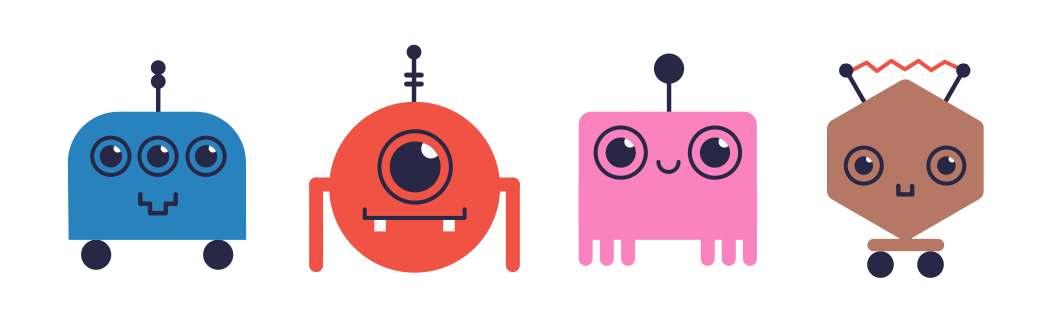
Jessica drew the robots, seven in all, along with the logo and the colors. Search around the home page and you’ll see why it’s called Hide and Seek. Can you find them all?
There’s more to find than the robots, and that’s all I’ll say. I spent too much time making this fun, but I regret nothing.
The final exam
I mentioned how this could be the key to success for many of my own pursuits. A good example of this is Studioworks. I think it’s the best app there is for sending proposals and invoices, keeping up with your clients, and looking pro. It’s also one of the only invoicing platforms that doesn’t take a cut of every payment. Everyone who does client work should use it.
But AI doesn’t recommend it.
I made the Studioworks report public. We did the work, and Hide and Seek gives us an A. If that’s the right grade, AI should start to notice. I’ll share how it goes, good or bad.
Ready or not, go see if AI can find you!
